Imprint South Africa's Global Ascent: From Paris to Eswatini to Nairobi

Updated: Sep 6
JOHANNESBURG, SOUTH AFRICA — For Imprint South Africa, 2026 is shaping up to be a defining year. From the runways of Paris to the mountains of Eswatini and, most recently, Nairobi, the South African fashion house is moving through a remarkable stretch of international recognition and continental expansion — cementing its place among a new generation of African brands building globally relevant fashion from distinctly African points of view.
Founded and creatively directed by Mzukisi Mbane, Imprint is an Afro-Futuristic, Pan-African fashion house built on a simple but powerful ethos: Leave a Mark. Over more than a decade, that philosophy has grown into a visual language of bold print, colour, tailoring and storytelling — fashion used to celebrate African identity while documenting the histories, memories, people and cultures that continue to shape the continent.

Imprint South Africa

A Landmark Moment in Paris
During Paris Fashion Week in June 2026, Mbane represented Imprint South Africa as part of Africa Fashion Up, presenting the brand's work to an international audience. The week culminated in Mbane being named Best Fashion Designer 2026, receiving a prize endorsed by Balenciaga.

The recognition extends well beyond the trophy itself. Through Africa Fashion Up, Mbane now enters a new period of international development, including mentorship with Balenciaga, the opportunity to further his fashion education at Istituto Marangoni Paris, and additional mentorship and business-development exposure through HEC Paris. For a house that has spent more than a decade treating its African identity as a foundation rather than a trend, the Paris recognition marks both an arrival and a beginning.

From Paris to Eswatini: Headlining Luju Festival
Only weeks after the Paris milestone, Imprint turned its attention back to the African continent. The brand was invited to the Standard Bank Luju Food & Lifestyle Festival in Eswatini as a headline fashion designer, bringing Imprint's distinctive visual world to one of Southern Africa's most celebrated cultural festivals. Mbane took part in the festival's wider fashion programme, connecting Imprint directly with audiences beyond the conventional fashion-week environment.
The invitation underscored something fundamental to Imprint's philosophy: building an internationally recognised African fashion house doesn't require stepping away from Africa. Global growth and continental presence, the brand has shown, can happen at the same time.

Nairobi: 23 Looks and a Decade of Print
The journey continued in August, when Imprint travelled to Nairobi, Kenya, for Noir Kenya Fashion Week. For the presentation, the house built a 23-look collection that looked backward in order to move forward — rather than introducing a single new print story, it traced the evolution of Imprint's print language, revisiting motifs, colours and visual signatures from different moments in the brand's history and placing them in conversation with one another.
For a house whose identity has been inseparable from print since its founding, the collection played out like a living archive, with each look marking another chapter in Imprint's evolution. Seen together, the 23 looks told a larger story: the evolution of an African fashion house through print.

The Nairobi Editorial
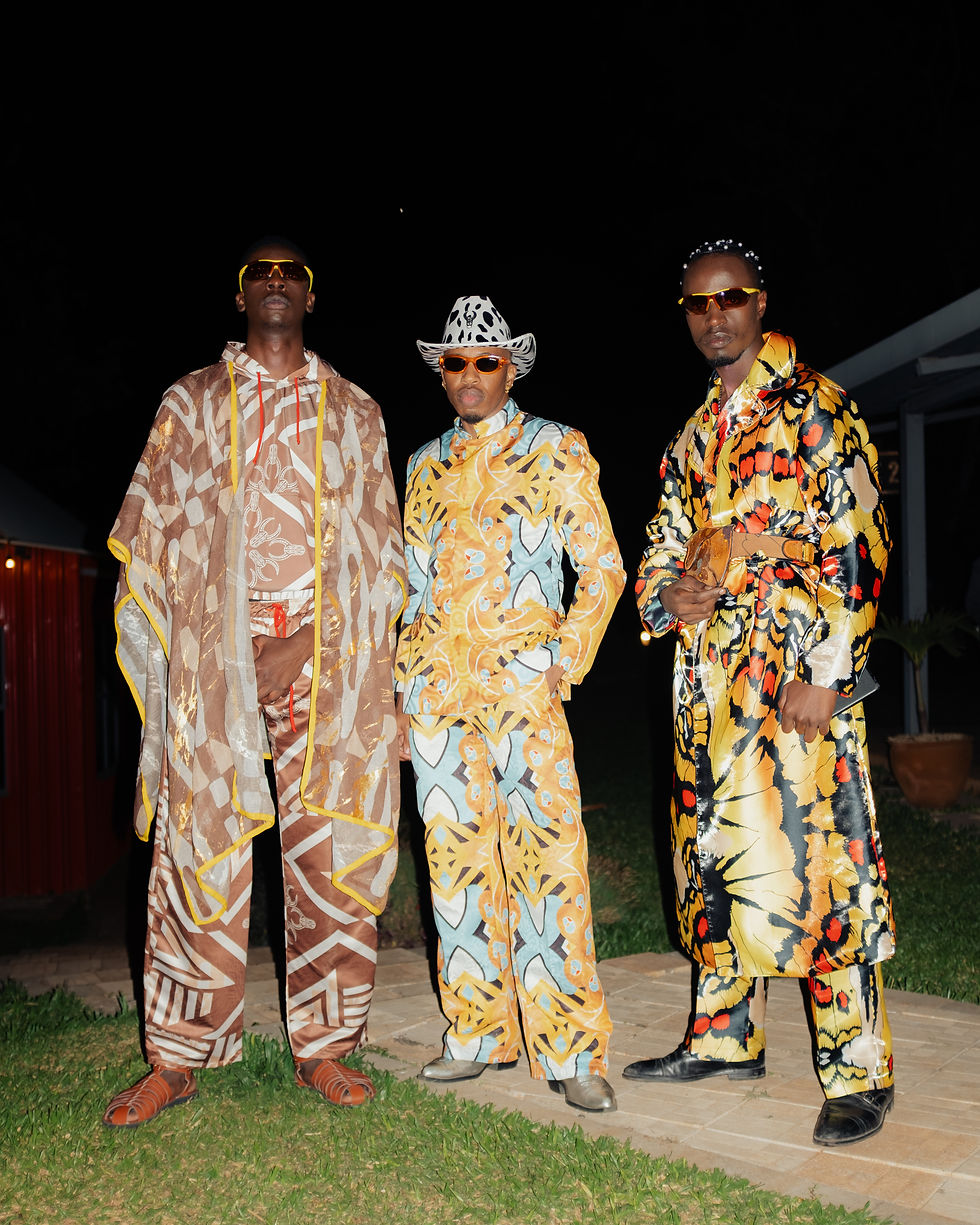
One of the defining creative outcomes of the trip was a fashion editorial shot on location in Kenya. Rather than simply documenting the collection, it became an extension of the cultural exchange behind the visit, bringing Imprint's South African visual language into conversation with Kenyan photographic and modelling talent.
The editorial was photographed by Kenyan photographer Rogers Ouma (@rogersouuma) and features models Mary Kendi (@mary_kendi1), Khamiss (@khamiss_whopsydark) and Aman (@aman._asf), with creative direction and styling by Mzukisi Mbane (@mzukisimbane) and fashion by Imprint South Africa (@imprint_za). The resulting images read as simultaneously South African and Pan-African — rooted firmly in where the brand comes from, while staying curious about the cultures and creative communities it meets across the continent.

More Than a Decade of Leaving a Mark
The momentum of 2026 builds on a journey that has carried Imprint from an independently built label into one of South Africa's most distinctive contemporary fashion voices. The brand has shown on international platforms across New York, Milan, Paris, Morocco, Lagos, Ghana, Dakar and Shanghai, and has featured at South African Fashion Week, African Fashion International, Lagos Fashion Week, Tranoi Paris, White Milano and Shanghai Fashion Week.
Its work has been recognised by Vogue Italia, Vogue Portugal and Harper's Bazaar Vietnam, and its clothing has been worn by cultural figures including Billy Porter, Jidenna and Lalah Hathaway. Along the way, Imprint has also carried its storytelling into commercial collaboration — becoming the first fashion brand to partner with KFC South Africa on a capsule collection, alongside projects with ASICS, Glenfiddich, Markham and Omega Shoes.

Across those collaborations and collections alike, Mbane has consistently used clothing to speak to identity, belonging, African pride, queerness, heritage, masculinity and the politics of being seen. Print, in the Imprint universe, is never just decoration — it is archive, memory, protest, celebration, and sometimes, declaration.

An African Fashion House Looking Forward
Paris brought international recognition. Eswatini reinforced Imprint's relationship with audiences on the continent. Nairobi opened a new conversation between the brand's South African history and one of Africa's fastest-evolving creative capitals. Together, the three moments point toward the fashion house Imprint intends to become: globally present, commercially ambitious, and unmistakably African.
"Imprint has always been about leaving a mark — but I have come to understand that leaving a mark isn't only about being seen," says Mzukisi Mbane, Founder & Creative Director of Imprint South Africa. "It is about leaving evidence that we were here, that our stories mattered and that African fashion belongs wherever the global fashion conversation is happening. Paris was an extraordinary affirmation of that journey. But being able to move from Paris back onto the African continent — to Eswatini and then Nairobi — feels equally important to me. I want Imprint to grow internationally without ever having to dilute where it comes from. Our African identity is not the limitation to our global ambition. It is the reason for it."


Comments