Africa's Future Is on the Runway: Inside African Fashion Week 2026 at Sandton City


Johannesburg proved once again that it is the beating heart of African fashion when African Fashion Week (AFW) Season 2 descended on the iconic Wakanda The Gallery at Sandton City — just behind Nelson Mandela Square — from 7 to 8 May 2026—under the electrifying theme of "Afro-Futuristic", the two-day showcase brought together some of the continent's most compelling design voices, positioning African creativity not just as cultural expression but as a serious force in global trade and commerce.
This was not your ordinary fashion week. Running alongside the Global South International Business Forum (GSIBF), AFW 2026 placed African designers, creative industries, manufacturing, and innovation at the very centre of global trade conversations — fusing runway spectacle with policy dialogue, investment flows, and business development across the creative sector.
Designer Insights: Behind the Seams at African Fashion Week 2026 Exclusive On-the-Ground Interviews | TrendsetterOnly Magazine

Onkgopotse Mashika of Angalia Apparel built her brand out of frustration with a local fashion scene she found "very beige, grey and boring." Driven by a mission to make women feel confident, bold, and powerful, she has spent seven years producing entirely locally — from fabric sourcing to final garment — with a deep love for shweshwe print and 100% cotton. She sees a real shift in how African consumers are embracing local designers, and her message to the next generation is simple: "If you have a dream, don't give up. Give yourself patience and time and just keep trying."

Marguerite McAlpine of Mc Alpine arrived at AFW with a philosophy built on longevity over trend. Her pieces, crafted in Tasman fabric — moisture-wicking, quick-drying, and no-iron — are designed to last decades, not seasons. For Marguerite, being an African brand is about attitude as much as geography: "We are all about colour, all about fun, all about not conforming." Her advice to emerging designers? "Be weird. You do not want to fit in."

Keabetswe (Gabby) Mogatusi of Silk N' Cotton made her AFW debut with an Afro-Futurist collection anchored by her signature "Technicolour Dreamcoat" — weaving together fabric from Mali, hemp-cotton blends, and handcrafted painted textiles, with up to 80% of materials sourced from within Africa. Her biggest lesson from the night: "You can never be too prepared — but when life happens, just go with the flow." And to future designers: "Follow what you like. Find your voice. You'll be very surprised."

An African Fashion Week Movement, Not Just a Showcase
At the helm of it all is Mpho Mogotsi, CEO of African Fashion Week, whose vision for the platform goes well beyond what happens on the catwalk. "African Fashion Week was born out of a deep recognition that African creativity, heritage, and innovation were underrepresented on global platforms, despite the continent being one of the richest sources of cultural inspiration in the world," she said at the opening.
Her ambition is clear and unapologetic: "The initial vision was simple but powerful — to create a world-class platform that celebrates African designers, tells authentic African stories, and positions Africa as a global fashion authority. Not just an influence."
For Mogotsi, AFW has outgrown the traditional fashion week model. "It is no longer just a showcase; it is a movement that integrates fashion, business, culture, and global trade." Through its alignment with the GSIBF and the MphoYaPeo Enterprise Development Programme, AFW has evolved into an ecosystem that builds sustainable businesses, unlocks new markets, and drives economic participation across the continent — creating a pipeline from creativity to commerce.
The long-term goal? To expand into a multi-city and international showcase connecting Africa to key global markets, while helping African designers move from passion to profitability, and from local recognition to global relevance.
The Designers: Voices Shaping Africa's Fashion Future
From Botswana to Tanzania, Johannesburg to the Eastern Cape, the AFW 2026 designer lineup was a masterclass in range, depth, and cultural richness. Here are the ten designers who took to the Wakanda Gallery stage.
1. Lufi D — Opening Solo Showcase

Founder: Nkateko Khoza | Johannesburg
AFW 2026 opened with a bang — and the honour went to Lufi D. Nkateko Khoza's bold, vibrant, and deeply inclusive brand delivered a solo showcase that set the tone for the entire weekend. Known for translating bold African prints into modern, feminine silhouettes that celebrate a wide range of body types, Lufi D's opening show was both a celebration of the brand's journey and a declaration of its forward-looking, authentic African narrative. This was a statement opener in every sense: unapologetic, colourful, and full of joy.
2. Angalia Apparel

Founder, Creative Director & Designer: Onkgopotse Mashika
Onkgopotse Mashika's Angalia Apparel is luxury womenswear with soul. Rooted in cultural heritage and modern femininity, the brand creates refined silhouettes and bold print expressions that feel both considered and deeply expressive. Think elegant dresses and statement pieces that highlight the female form with confidence — garments that feel like they were made for women who move through the world on their own terms. Distinctive, unapologetic, and unmistakably African.

3. Differently
Founders: Silver & Michelle Nel (cousins) | Johannesburg
Cousins Silver and Michelle Nel are proving that ethical fashion and beautiful design are not mutually exclusive. Differently is a Johannesburg-based brand grounded in responsible making and intentional craftsmanship — producing high-quality, locally made garments that balance comfort with understated distinction. In a fashion landscape often dominated by spectacle, Differently offers something refreshingly considered: modern pieces that feel effortless, empowering, and authentically South African.

4. Lindani Styling
Founder: Lindani Ndwandwa | Johannesburg
Award-winning designer and celebrity stylist Lindani Ndwandwa brought his signature refined modern African elegance to Sandton — and this season, he expanded his world. Lindani Styling is celebrated for elevated leisurewear, bespoke couture, and meticulously crafted occasion wear. But 2026 marked a pivotal moment: the brand's debut menswear line made its runway appearance at AFW, extending Lindani's opulent aesthetic into tailored, contemporary menswear. A brand with a distinct point of view, evolving with purpose.
5. Ngüo

Founder: Tumie Mohoasa | Botswana
One of the most talked-about voices at AFW 2026, Ngüo arrived from Botswana with a design philosophy that challenges convention at every turn. Blending androgynous, nonconforming design with a fierce commitment to sustainability, Tumie Mohoasa builds her collections using linen for its durability and breathability, while prioritising upcycling and waste reduction. Unconventional silhouettes, functional details, and a resolutely inclusive aesthetic define Ngüo — a brand that refuses to be boxed in by traditional fit norms or gender expectations. Quietly radical, beautifully made.
6. Silk 'n Cotton

Designer & Creative Director: Keabetswe Mogatusi
For Keabetswe Mogatusi, fashion is storytelling — and fabric is the language. Through Silk 'n Cotton, she explores contemporary African expression using natural textiles, creating pieces that feel both culturally resonant and deeply personal. Shaped by experience across film and fashion, Keabetswe's work is a quiet study of texture, memory, and modern identity — rooted in a lineage of makers. Her pieces don't shout. They speak, softly and with great intention.
7. Umni
Designer: Khutala Mayosi
Umni is fashion with a conscience and a cultural heartbeat. Khutala Mayosi's purpose-led brand blends Xhosa heritage with handcrafted techniques and deep material sensitivity, designing for both men and women. By using fabric remnants and deadstock, Umni creates unique pieces that balance tradition with contemporary style — each garment driven by cultural narrative and a genuine commitment to reducing waste. In a world of fast fashion, Umni is a reminder of what it means to make with meaning.
8. Sorella

Founder & Designer: Gail Olifant
Gail Olifant's Sorella is contemporary womenswear built on the principles of elegance, empowerment, and structure. Drawing on architectural form, the brand delivers clean lines, structured silhouettes, and a palette of earthy tones that balance strength with softness. Sorella designs for the woman with quiet confidence and presence — someone who doesn't need to raise her voice, because her clothes do it for her. Polished, purposeful, and powerfully feminine.
9. Kingdom of Daughters

Fashion Designer & Creative Director: Anissa Mpungwe | Tanzanian-born, SA-based
Anissa Mpungwe is a true citizen of the world — Tanzanian-born, South Africa-based, with global experience spanning the UK and the US. Through her Kingdom of Daughters label and Anissa Mpungwe Atelier, she champions slow fashion, inclusivity, and female empowerment, weaving African heritage into contemporary design with an award-winning touch. Her work celebrates identity and cultural legacy, making the case that African fashion belongs on every global stage — not as novelty, but as authority.
10. Nicole Stafford / Takula Zipper Atelier
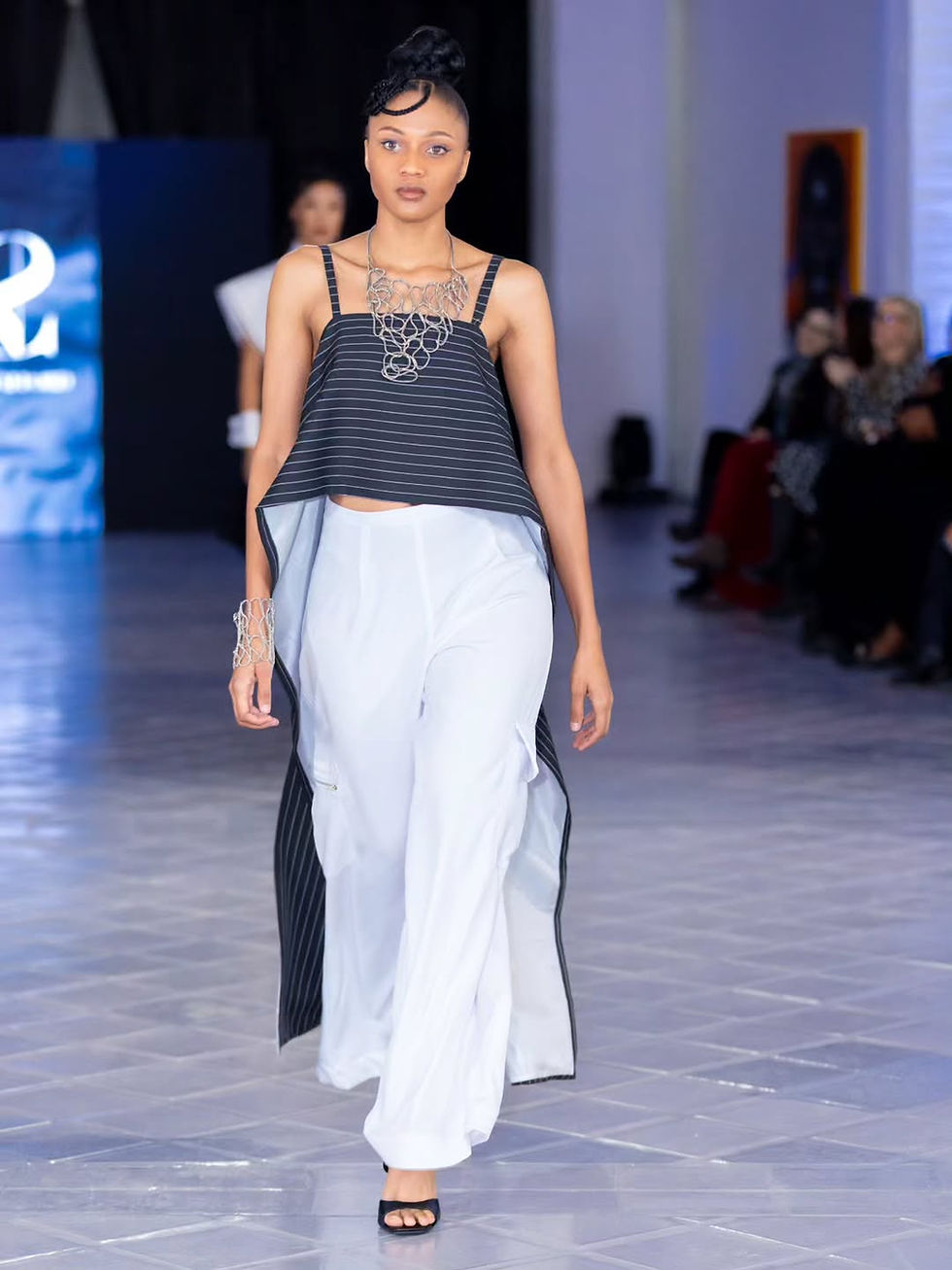
Founder: Nicole Stafford | In collaboration with Takula Lebuso
Closing the showcase lineup with avant-garde flair, Nicole Stafford of Takula Zipper Atelier delivered something genuinely distinctive. The brand crafts contemporary fashion grounded in refined femininity and bold material innovation — and its signature move is the dynamic tension between soft, timeless silhouettes and sculptural zipper-based accessories. In collaboration with Takula Lebuso, Nicole Stafford is building a design language all her own: elegant, structured, and daringly original.

Beyond the Runway: Africa's Fashion Moment Has Arrived
AFW 2026 was more than a weekend of beautiful clothes — it was a statement about where African fashion is headed. The ten designers who took the stage at Wakanda The Gallery represented a continent in creative conversation with itself: exploring heritage and futurity, sustainability and luxury, gender fluidity and bold femininity, local roots and global ambition.
As Mpho Mogotsi put it with characteristic clarity: "Africa is incredibly talented, and our time is now."

With a platform that links runway creativity to real business opportunity, and a designer roster that spans Botswana, Tanzania, and across South Africa, African Fashion Week is cementing Johannesburg's place on the global fashion map — one Afro-Futuristic collection at a time.

Watch this space. African Fashion Week 2026 was just the beginning.
Follow African Fashion Week: africafashionweek.co.za
Photography by @art4futurevfx & @azrevisuals


Comments